About me
Hi, I’m Anne!
I'm Anne Remy, an American psychotherapist based in Brighton, UK. I work with adults who are looking for a thoughtful, relational approach to therapy, particularly those navigating trauma, chronic stress, anxiety, persistent pain or periods of significant change.
Much of my work is with professionals, creatives and internationally mobile people who are accustomed to managing a great deal. They may be successful, capable and outwardly functioning, while privately feeling overwhelmed, disconnected or uncertain about how to move forward.
I offer online psychotherapy across the UK and internationally.

Working with internationally mobile clients
Having lived in several countries myself, including the UK, Lebanon and Taiwan, and spent time travelling in more than 70 countries, I have a personal appreciation of the complexity of living across different places and cultures.
International life can offer enormous opportunities, but it can also involve repeated transitions, changes in identity, distance from familiar support systems and a complicated relationship with the idea of home.
I work with people who live abroad, travel frequently for work, have relocated internationally or find themselves navigating several different cultural and professional worlds.
My own experience informs my curiosity, but I don't assume that everyone's experience of living internationally is the same. I aim to make room for the particular meaning these experiences have in your life.
My professional background and qualifications
I hold a BA in Psychology and an MSc in Humanistic Psychotherapy from the Metanoia Institute in London. I am a Full Clinical Member of the UK Council for Psychotherapy (UKCP), an EMDRIA Certified Therapist™ and a member of EMDR UK.
I am also a practitioner of Pain Reprocessing Therapy, trained through the Pain Reprocessing Center.
My wider training includes trauma-sensitive yoga, somatic approaches and breathwork. These experiences have contributed to my understanding of embodied experience and inform my psychotherapy work, while psychotherapy remains the foundation of my clinical practice.
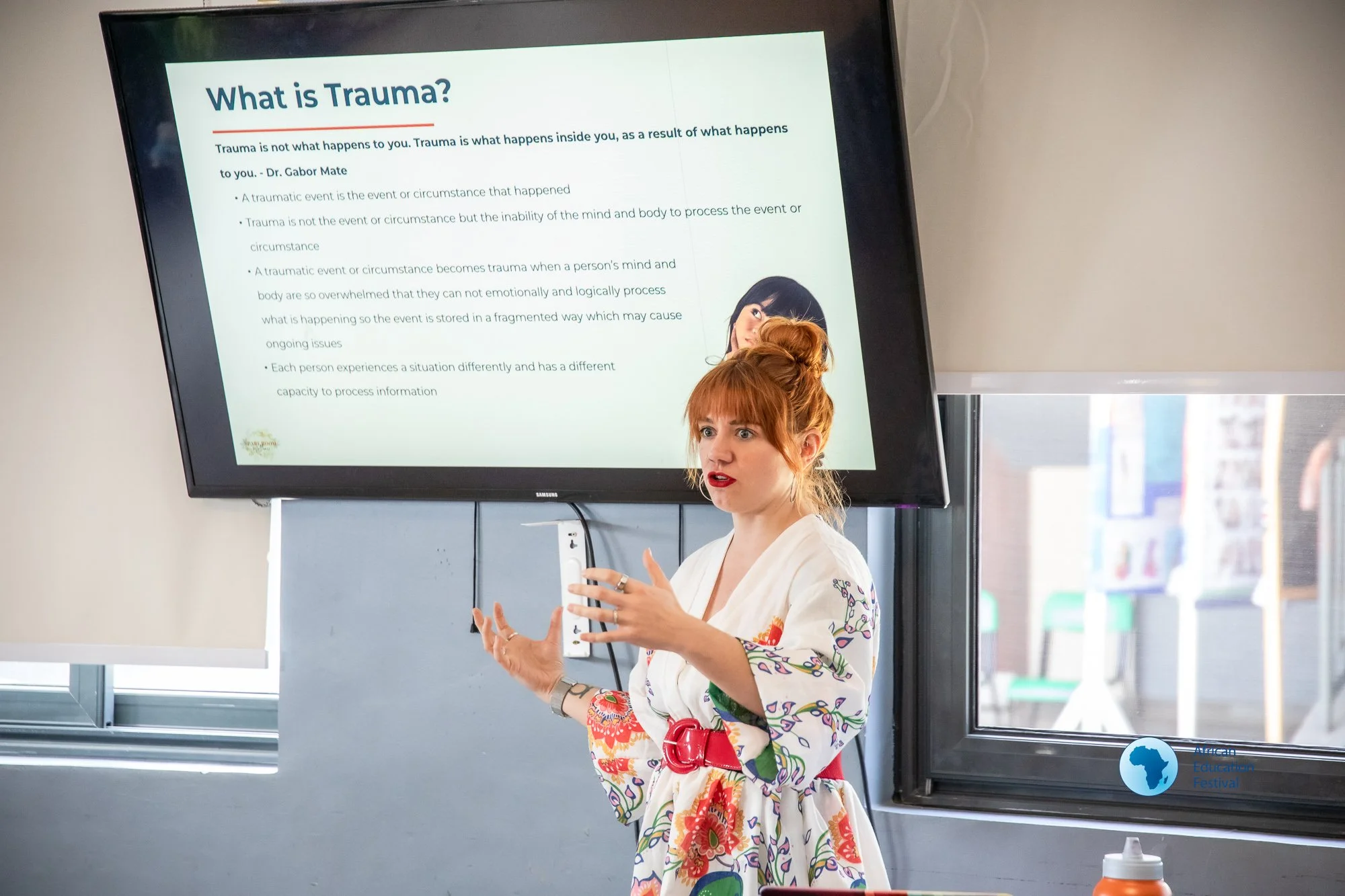
Before becoming a psychotherapist, I spent around 15 years working in education, including international education and school wellbeing. I have delivered training and spoken at international conferences on trauma-informed teaching, educator wellbeing and the impact of stress and trauma in educational environments.
My professional experience has shaped an interest in the ways our personal histories interact with the systems, cultures and environments in which we live and work.
You can find more about my qualifications here
A little more about me
Outside the therapy room, I'm an avid runner, somewhat wreckless hiker, a reader and enthusiastic traveller. I'm interested in how people make meaning of their experiences, how we relate to one another, and how the environments we inhabit shape our sense of ourselves.
I also believe that being a psychotherapist involves an ongoing commitment to personal reflection. My own therapy, continued professional development and supervision are important parts of how I practise.
I aim to offer an inclusive, culturally responsive and non-judgemental space, where different identities, backgrounds and ways of relating can be explored with respect.
My approach to psychotherapy
My work is grounded in humanistic psychotherapy and informed by a particular interest in the relationship between psychological experience and the body.
I don't see the mind and body as separate parts of our experience. Our histories, relationships and environments influence how we feel, think, respond to stress and experience ourselves physically. Sometimes we can understand something intellectually and still find that our emotional or bodily responses haven't shifted.
This is why I incorporate somatic and mind-body approaches into my psychotherapy practice. Alongside talking and reflection, we may pay attention to sensations, emotional responses, patterns of tension, or the ways your body responds when something feels difficult or important.
Depending on your circumstances and what we are working towards, I may also draw on EMDR or Pain Reprocessing Therapy. These approaches can be integrated into ongoing psychotherapy or used in more focused work where appropriate.
I aim to work collaboratively, with curiosity and care, rather than imposing a particular idea of what healing should look like. The pace and direction of therapy are something we develop together.
Who I work with
I work with adults experiencing a range of psychological and emotional difficulties, including:
Trauma and experiences that continue to affect the present
Anxiety, panic and chronic stress
Burnout, emotional exhaustion and difficulty switching off
Chronic pain and persistent physical symptoms
Relationship and attachment difficulties
Feeling disconnected from yourself or your body
Perfectionism, self-criticism and pressure to perform
Life transitions, immigration and questions of identity or belonging
Feeling stuck despite having considerable insight into yourself
I'm particularly interested in working with people who have become very good at coping, adapting and meeting expectations, but who are beginning to recognise the cost of doing so.
You don't need to be in crisis to come to therapy. Sometimes the reason for starting is simply that the way things are no longer feels sustainable.
About Spare Room Wellness
“Between stimulus and response there is a space. In that space is our power to choose our response. In our response lies our growth and our freedom.” - Viktor Frankl

Spare Room Wellness began with the idea that we all need a little space in which to pause, reflect and consider things differently.
The name came from my spare room in London, which became a place for online work, personal practice and reflection during the pandemic. It reminded me how valuable it can be to have somewhere that is separate from the demands of everyday life.
I think of therapy in a similar way. It can offer space to understand what has shaped you, explore what is happening now and consider what might become possible.
If you're considering therapy, I offer a 20-minute introductory call where we can talk about what you're looking for and whether working together might be a good fit.